


If an overloaded truck injured you, you can sue the trucking company when negligent loading, weight violations, or poor supervision contributed to the crash. In California and most states, you can recover through six coordinated paths: injury claims against the at‑fault driver or carrier, vicarious liability claims against employers and logistics parties, workers’ compensation for on‑the‑job injuries, product liability for failed cargo systems, UM/UIM insurance claims, and state victim compensation programs. Early evidence preservation, disciplined medical documentation, and strategic claim sequencing maximize payouts. California’s comparative fault still allows recovery even if you share some blame, and most injury lawsuits must be filed within two years. Kash Legal can coordinate every path to secure full, fair compensation.
1. Kash Legal Group: Expert Legal Support for Overloading Victims
Kash Legal Group is a California trial firm built for complex trucking cases, with a client‑first playbook, “Kash Wins!” culture, and over $500 M recovered. We work on contingency, and typical PI fees run about 33–40 %, so you pay nothing unless we win, and we front case costs to preserve leverage. Overloading means a commercial or personal vehicle exceeds its rated weight or cargo capacity, heightening rollover, brake, and tire‑failure risks, and expanding liability. Medical inflation is pushing claim values higher, so early counsel to capture ELD data, scale records, and expert analysis can materially raise outcomes. We pair local knowledge of California venues and insurers with aggressive evidence preservation to outpace carrier defense tactics and maximize compensation.
- Why Kash: Rapid scene response, black‑box/ELD pulls, and spoliation letters within days of hire.
- Fee clarity: No upfront costs; contingency aligned with your recovery and case complexity.
- Value edge: Medical inflation elevates damages; we quantify future care and wage loss.
- Local focus: California judges, insurers, and defense firms are our weekly playing field.
- Start now: See our overloaded‑truck hub for steps and timelines at Kash Legal’s guide.
Key takeaway: Kash Legal offers no‑up‑front‑cost, contingency representation and aggressive evidence collection to secure the maximum possible recovery for overloaded‑truck victims.
2. Recover Compensation from the At‑Fault Driver or Commercial Carrier
The first path is a negligence claim against the driver and, often, the carrier that permitted unsafe loading or violated weight rules. “Negligence occurs when a driver or company fails to use reasonable care, directly causing injury by violating weight regulations or safe loading practices.” Proving fault takes targeted evidence: photos of cargo shift, certified scale tickets, ELD/telematics, dashcam, and witness statements. In California’s pure comparative fault system, your award is reduced by your share of blame but not barred. Aim to secure black‑box data quickly, as carriers may rotate vehicles and overwrite logs if no preservation letter is served.
- Capture proof: Scene photos, tire marks, debris paths, and cargo spillage details matter.
- Lock data: Demand ELD, ECM, GPS, dispatch, weigh‑station, and pre/post‑trip reports.
- Expert link: Use accident reconstruction and load‑dynamics experts to prove causation.
- Comparative fault: Partial fault reduces but does not eliminate your compensation.
- File fast: Preserve claims, meet deadlines, and avoid evidence spoliation risks.
| Factor | Sue Driver (Individual) | Sue Carrier (Company) |
|---|---|---|
| Typical insurance | Lower personal limits; recovery may cap early | Higher commercial limits; better coverage access |
| Evidence control | Less documentation beyond police report | ELD, ECM, logs, policies, training, and audits |
| Settlement leverage | Limited assets can constrain negotiations | Corporate exposure increases settlement pressure |
| Complexity/cost | Simpler process; fewer defendants | More complex; higher payoff potential |
| Timeline | Potentially faster but capped by coverage | Longer discovery; stronger damages case |
| When recommended | Clear fault, modest damages, quick closure | Serious injuries, systemic failures, larger losses |
- Learn how to build proof with Kash Legal’s step‑by‑step playbook.
Key takeaway: Targeted evidence (photos, scale tickets, ELD data) and swift preservation are essential to a successful negligence claim against the driver or carrier, even under comparative fault.
3. Pursue Claims Against Employers and Vicarious Liability Parties
Many overloaded‑truck cases extend beyond a single driver to the employer, shipper, or logistics partner that planned, directed, or ignored unsafe loads. Vicarious liability means that an employer or principal may be held responsible for the acts or omissions of their employees committed during work duties. Liability also reaches entities that set unrealistic schedules, mis‑declared cargo weights, or loaded cargo improperly. Broadening the defendant pool expands insurance options and increases your negotiation leverage. Move quickly to request contracts, load sheets, bills of lading, and communications that show who controlled weight, timing, and loading decisions.
- Common targets: Driver’s employer, motor carrier, and parent or affiliate companies.
- Shipper/receiver: Negligent loading or weight misstatements can share fault.
- Brokers/contractors: Unsafe dispatching or policies may create liability exposure.
- Policy leverage: Corporate policies often carry higher limits than individuals.
- Discovery focus: Contracts and SOPs can prove control and duty allocation.
Key takeaway: Holding employers, shippers, and logistics firms liable widens insurance coverage and strengthens settlement leverage, so pursue vicarious liability early.
4. Utilize Workers’ Compensation Benefits for On‑the‑Job Injuries
If you were injured while working—whether as a warehouse employee, delivery driver, or roadway worker—workers’ compensation can fund medical care and wage loss regardless of fault. Workers’ comp is a state‑mandated insurance program providing medical and wage‑loss benefits to employees injured in the course of work, regardless of fault. You may also bring third‑party claims against the at‑fault carrier, shipper, or manufacturer for excess damages like full pain and suffering. Expect offsets and lien coordination between your comp carrier and third‑party recovery, making coordinated strategy and documentation crucial to net you more.
- Benefits: Medical treatment, temporary disability, permanent disability, and retraining.
- Add‑on claims: Third‑party suits can cover pain, suffering, and full wage losses.
- Documentation: Timely care, ICD/CPT coding, and narrative causation drive value.
- Deadlines: Report injuries promptly and meet claim and appeal timelines.
- Trend: Claim severity is rising, raising the stakes for expert case management.
Key takeaway: Workers’ compensation provides guaranteed medical and wage benefits, and can be paired with third‑party suits for full pain‑and‑suffering recovery.
5. Seek Product or Equipment Liability Claims for Defective Cargo Systems
Defective equipment can magnify overloading risks or independently cause loss of control, brake failure, or cargo ejection. Product liability is legal responsibility imposed on manufacturers or sellers for injuries caused by defective products that are dangerous when used as intended. Examples include failed ratchet straps, defective load sensors, faulty hitch assemblies, or trailer brake defects. Preserving the failed component is essential, as expert testing can prove design or manufacturing flaws. These claims may unlock additional damages, including punitive awards in egregious cases, and often proceed alongside negligence suits against carriers and loaders.
- Preserve parts: Secure and photograph failed straps, racks, sensors, or brakes.
- Paper trail: Keep purchase receipts, maintenance logs, and recall notices.
- Expert testing: Metallurgy and failure analysis prove defect and causation.
- Dual tracks: Pursue product and negligence claims to expand recovery.
- Deterrence: Egregious defects can support punitive damages under state law.
Key takeaway: Retaining defective cargo components and pursuing product‑liability claims can add significant damages, including punitive awards, to a negligence case.
6. Access Uninsured or Underinsured Motorist Coverage
When the at‑fault party lacks adequate insurance, your own UM/UIM coverage can backfill damages up to your policy limits. Uninsured/Underinsured Motorist (UM/UIM) Coverage is an auto‑policy provision allowing drivers to recover damages from their own insurer if the at‑fault party’s insurance is insufficient or nonexistent. File promptly, provide medical and wage documentation, and be prepared for adversarial negotiations even with your insurer. Strong demand packages, medical narratives, and, when needed, arbitration or litigation posture improve outcomes. Appeals and strategic legal demands can drive better results under evolving California insurance rules and practices.
- Steps: Notify your insurer, document losses, and submit a detailed demand.
- Evidence: Include bills, records, photos, and expert opinions on prognosis.
- Pros: Faster access and coverage when the other driver is unknown or uninsured.
- Cons: Policy limits may trail damages; negotiations can still be combative.
- Tip: Align timelines to preserve both UM/UIM and third‑party claim windows.
Key takeaway: UM/UIM coverage acts as a safety net when the at‑fault party is under‑insured, but requires prompt, well‑documented demands.
7. Explore Victim Compensation and State Assistance Programs
If insurance and lawsuits leave gaps, government programs can help with unreimbursed medical bills, counseling, and lost income. A victim compensation program is a public fund that helps crime or accident victims by reimbursing certain unrecovered costs, especially when their damages exceed insurance proceeds or wrongdoer payments. In California, CalVCB offers aid with strict documentation, eligibility rules, and statutory caps. Apply early, keep meticulous receipts, and coordinate with your attorney to avoid denials for missed deadlines or incomplete files. Program rules and reimbursement categories are updated periodically by regulation.
- Eligibility: Residency, incident reporting, and cooperation requirements apply.
- Covered costs: Emergency care, mental health, funeral, and limited wage loss.
- Documents: Police report, medical bills, proof of income, and ID are typical.
- Filing: Submit online or by mail; track deadlines and appeal if denied.
- Reference: See CalVCB’s current regulations for categories and caps.
Key takeaway: State victim‑compensation programs can fill financial gaps left by insurance and litigation, but strict documentation and timely filing are essential.
Frequently Asked Questions
What qualifies as “overloading” in a claim?
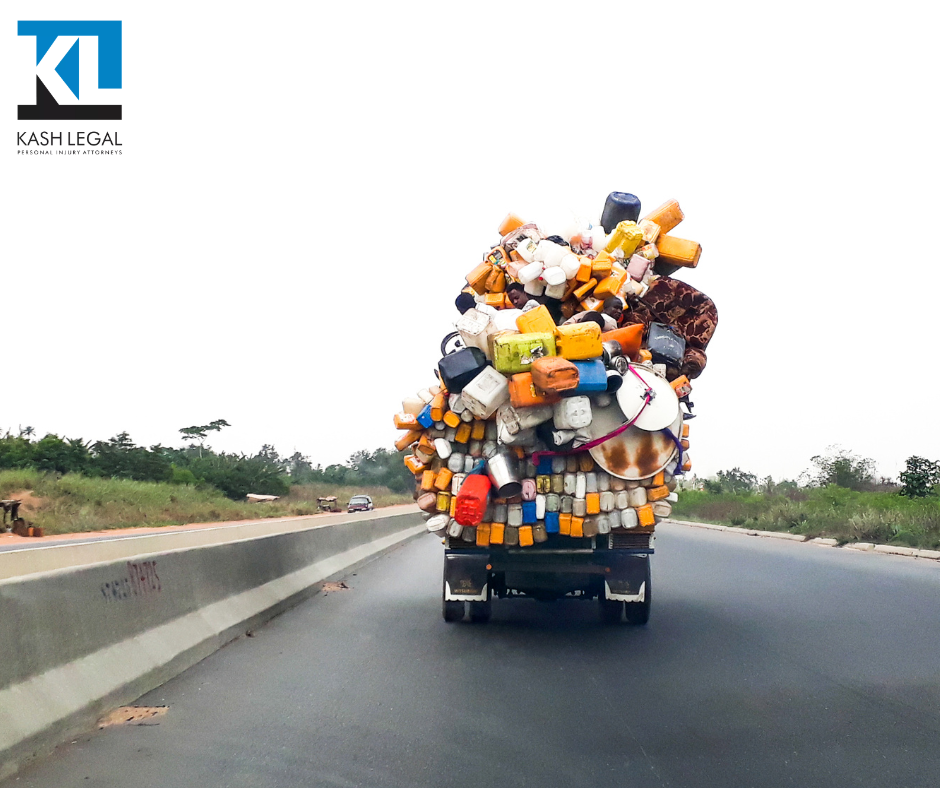
Overloading generally means exceeding a vehicle’s Gross Vehicle Weight Rating (GVWR), axle limits (GAWR), or safe cargo capacity, or loading cargo in a way that destabilizes the vehicle (e.g., high center of gravity, unsecured or uneven loads). Proof can come from certified scale tickets, bills of lading, ELD/telematics, maintenance and pre‑trip reports, and expert analysis.
Do I need a weight‑violation ticket to win?
No. A citation helps, but you can prove negligence through photos of cargo shift, braking or tire‑failure evidence, load documents, witness statements, and expert reconstruction. Improper loading, poor supervision, or unsafe dispatch can establish fault even without a formal overweight ticket.
How long do I have to file?
In California, most personal‑injury claims must be filed within two years. Shorter notice deadlines can apply if a public entity is involved (often six months to present a government claim). Act quickly to avoid evidence loss and statute issues.
Can I recover if I’m partially at fault?
Yes. California’s comparative fault reduces your award by your percentage of responsibility but does not bar recovery. Thorough evidence and expert analysis can limit any fault assigned to you.
What damages can I recover?
Medical bills, future care, lost wages and earning capacity, pain and suffering, property damage, and, in egregious product‑defect cases, potential punitive damages. Workers’ compensation can cover medical and wage benefits for on‑the‑job injuries, while third‑party claims address full tort damages.
Should I speak with the trucking company’s insurer?
Not before consulting counsel. Adjusters may seek statements or broad medical releases that undermine your claim. Direct inquiries to your attorney and focus on treatment and documentation.
What if I was injured while working?
File a workers’ compensation claim promptly and explore third‑party claims against negligent drivers, carriers, shippers, or product manufacturers. Coordinating liens and offsets is key to maximizing your net recovery.
How long will my case take?
Straightforward claims can resolve in months; complex multi‑defendant or product cases may take longer due to discovery and expert work. Early evidence preservation, organized medical records, and clear demand packages accelerate timelines.
What if the at‑fault driver is uninsured or flees the scene?
Your UM/UIM coverage can step in up to policy limits. Notify your insurer quickly, submit a well‑supported demand, and be prepared for arbitration or litigation if needed.
Do pedestrians, cyclists, or motorcyclists have the same rights?
Yes. Any road user injured by an overloaded vehicle can pursue the same liability paths outlined here, subject to the same deadlines and evidence requirements.
Call Kash Legal for a FREE Consultation
Overloaded‑vehicle cases move fast—evidence disappears, logs overwrite, and insurers mobilize quickly. Acting early with a coordinated strategy across negligence, vicarious liability, workers’ comp, product liability, and UM/UIM claims maximizes recovery and reduces denials, offsets, and delays.
- Preserve evidence now: Photos, witness info, vehicle and cargo inspections, ELD/ECM pulls, and certified scale data.
- Get medical care and follow‑ups on record; keep bills, receipts, and time‑off documentation.
- Avoid recorded statements and broad medical authorizations until you have counsel.
- Track all deadlines, including government‑entity notice rules where applicable.
- Contact Kash Legal for a free consultation—we front costs and work on contingency to protect your leverage from day one.
Note: This article is for informational purposes only and is not legal advice. For a free, no‑obligation consultation with a California‑focused contingency‑fee lawyer, contact Kash Legal.
About Us – Kash Legal
Kash Legal is a trusted California personal injury law firm known for delivering strong, client-focused advocacy to individuals and families harmed in accidents. With a reputation built on integrity, responsiveness, and consistent results, the firm handles a wide range of complex injury cases—from rideshare and motor-vehicle collisions to catastrophic injuries and wrongful death claims. As a BBB Accredited business, Kash Legal upholds high standards of professionalism and ethical service, giving clients confidence that their cases are handled with transparency and care. The firm’s commitment to personalized guidance and relentless negotiation has made it a respected resource for injury victims seeking justice and fair compensation.
Our office locations in California:
- Los Angeles (Beverly Hills): 2839 S. Robertson Blvd. Los Angeles CA 90034
- San Diego: 8775 Aero Dr Suite 138, San Diego, CA 92123 | (619) 650-5845
- Chula Vista: 750 Otay Lakes Rd, Chula Vista, CA 91910 | (619) 378-9288
- Reseda: 18355 Sherman Way, Reseda, CA 91335 | (747) 298-5611
- Murrieta: 25185 Madison Ave, Murrieta, CA 92562 | (951) 651-0774
- Temecula: 27555 Ynez Rd, Temecula, CA 92591 | (951) 484-1550
- Victorville: 14393 Park Ave, Victorville, CA 92392 | (760) 454-1654
- Hesperia: 17096 Sequoia St., Hesperia CA 92345 | (760) 919-4264
- Bakersfield: 2020 Eye St, Bakersfield, CA 93301 | (661) 460-2500
- Palm Desert: 74333 CA-111, Suite 205, Palm Desert, CA 92260 | (760) 529-8181
- Fresno: 4270 N Blackstone Ave Suite 201, Fresno, CA 93726 | (559) 551-2688
- Sacramento: 3626 Fair Oaks Blvd, Sacramento, CA 95864 | (916) 892-1263
- Roseville: 2999 Douglas Blvd Suite #180H, Roseville, CA 95661 | (916) 252-1165
- Oakland: 1300 Clay St, Oakland, CA 94612 | (510) 800-8293
- Pleasant Hill: 3478 Buskirk Ave suite 1054, Pleasant Hill, CA 94523 | (925) 940-9840
- Vacaville: 201 E Monte Vista Ave, Vacaville, CA 95688 | (707) 883-1555
- Fairfield: 1545 N Texas St, Fairfield, CA 94533 | (707) 881-9205
- San Jose: 111 North Market Street, Suite 300, San Jose, CA 95113
- Cupertino: 10080 N Wolfe Rd, Cupertino, CA 95014 | (818) 383-7478
- San Mateo: 1900 S Norfolk St #388, San Mateo, CA 94403 | (650) 629-1595