


Choosing the wrong attorney after a runaway truck accident can cost you hundreds of thousands of dollars in lost compensation. The eight red flags that signal a bad truck accident attorney include: heavy reliance on advertising over trial credentials, no documented truck accident trial history, poor communication, lack of FMCSA regulatory knowledge, insufficient investigative resources, opaque fee structures, pressure to accept low early settlements, and thin or negative client reviews. Recognizing these warning signs before you sign anything protects your recovery—financially, physically, and emotionally.
Why the Stakes Are So High in Truck Accident Claims
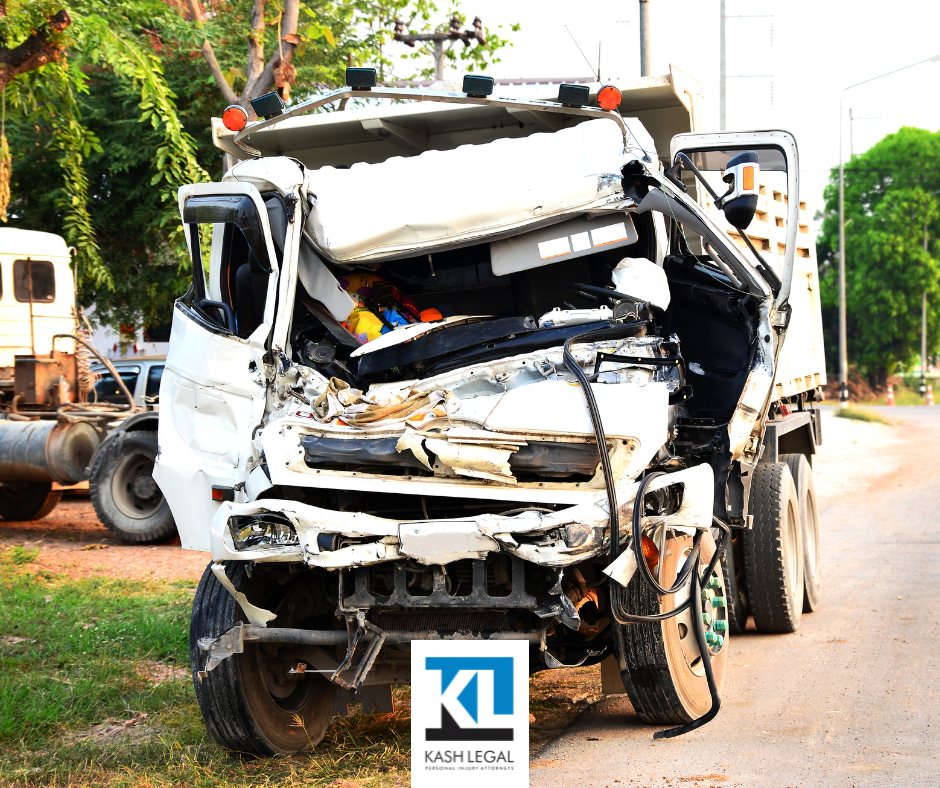
Runaway truck accidents are among the most catastrophic collisions on California roads. Commercial vehicles weigh up to 80,000 pounds—compared to roughly 4,000 pounds for a passenger car—making injuries like traumatic brain injury (TBI), spinal cord damage, and wrongful death tragically common outcomes.
These cases are also legally complex. Unlike standard car accident claims, truck accident litigation involves multiple liable parties (drivers, carriers, shippers, manufacturers), strict federal regulations, and well‑funded insurance defense teams. A single misstep by an underprepared attorney can mean the difference between a life‑changing settlement and a lowball payout that doesn’t cover your long‑term medical needs.
Understanding what to look for in a truck accident attorney starts with knowing what to avoid. The eight red flags below are drawn from industry data, client review patterns, and documented case outcomes.
1. Red Flag #1: Overreliance on Advertising Instead of Trial Credentials
What “Settlement Mill” Means—and Why It Should Concern You
Key Definition: A settlement mill is a high‑volume law firm that resolves cases quickly and in bulk, prioritizing speed over maximum recovery. These firms typically avoid litigation and accept lower offers to close files fast.
Some of the most heavily advertised personal injury firms in California spend tens of millions of dollars annually on TV spots, billboards, and digital ads. According to research on Los Angeles truck accident law firms, marketing spend and courtroom performance are not the same thing—and clients who choose firms based on name recognition alone often end up with smaller settlements.
Insurance companies know which firms go to trial and which ones don’t. When a trucking company’s defense team sees an attorney with no trial history, they have little incentive to offer a fair settlement. Trial‑readiness is your negotiating leverage.
Questions to Ask Before You Hire
- “How many truck accident cases have you taken to verdict—not just settlement?”
- “Can you show me documented case results from truck or 18‑wheel‑er litigation?”
- “What percentage of your cases go to trial versus settle?”
- “Do you personally handle trials, or do you refer out?”
A credible attorney will answer these questions directly and specifically. Vague answers or deflection to advertising accolades are warning signs.
2. Red Flag #2: No Trial History in Truck Accident Cases
Why General Personal Injury Experience Is Not Enough
Key Definition: Trial history in truck accident cases means a documented record of taking commercial vehicle accident claims to verdict before a judge or jury—not merely settling before trial.
Truck accident litigation is a specialized field. It requires familiarity with commercial carrier defense tactics, access to trucking industry experts, and the ability to navigate complex multi‑defendant liability structures. Firms with documented truck accident trial experience are better equipped to identify all liable parties—including the motor carrier, cargo loader, and vehicle manufacturer—and present compelling evidence to a jury.
A general personal injury attorney who primarily handles slip‑and‑fall or rear‑end fender‑bender cases will be at a structural disadvantage against the experienced defense teams that trucking companies and their insurers employ.
How to Verify Trial Experience
- Request a written list of truck or commercial vehicle verdicts, including case type and outcome.
- Search your state’s court records for the attorney’s name in civil trial filings.
- Ask whether the attorney has deposed trucking company representatives or safety officers.
- Look for board certifications or specialized training in commercial vehicle litigation.
Signing with a firm that lacks courtroom wins in truck accident cases is one of the most material risks to your runaway truck accident settlement. Explore Kash Legal’s record in California semi‑truck accident settlements to understand what documented experience looks like.
3. Red Flag #3: Poor Communication and Inconsistent Case Updates
Why Attorney Responsiveness Directly Affects Your Case
Key Definition: Case updates are regular, substantive communications from your attorney covering case progress, strategy changes, upcoming deadlines, and next steps—not just responses to your calls.
High‑volume injury firms frequently delegate client contact to paralegals or intake staff. While support staff play a legitimate role, research on client complaints about injury firms consistently identifies delayed responses, inconsistent points of contact, and unexplained case developments as top grievances. Poor communication is not just frustrating—it signals that your case may not be receiving the attention it deserves.
Warning Signs of Poor Communication
| Warning Sign | What It May Indicate |
|---|---|
| Days‑long delays in returning calls or emails | Case is low priority at a high‑volume firm |
| Different staff member contacts you each time | No dedicated case manager assigned |
| Vague or generic status updates | Attorney is not actively working the file |
| You learn about developments from the other side first | Breakdown in case oversight |
| Difficulty scheduling time to speak with the attorney | Attorney is inaccessible or overloaded |
Questions to Ask About Communication
- “Who will be my primary point of contact throughout my case?”
- “How often will I receive updates on case progress?”
- “What is your typical response time for client calls or emails?”
- “Will I have direct access to the attorney handling my case?”
4. Red Flag #4: Lack of FMCSA and Trucking Industry Expertise
What FMCSA Proficiency Means for Your Settlement
Key Definition: FMCSA proficiency refers to a truck accident attorney’s working knowledge of Federal Motor Carrier Safety Administration regulations—the federal rules governing commercial truck operations, driver hours, maintenance requirements, and carrier licensing.
The Federal Motor Carrier Safety Administration sets mandatory safety standards for every commercial truck on U.S. roads. Violations of these regulations—improper brake maintenance, falsified logbooks, driver hours‑of‑service violations—are often the direct cause of runaway truck accidents. An attorney who doesn’t understand these rules cannot effectively identify violations, and violations are frequently what elevate a case from a standard negligence claim to one involving punitive damages.
Top‑performing truck accident firms treat regulatory expertise as a foundational requirement, not a specialty add‑on. This includes knowing how to request and interpret Electronic Logging Devices (ELDs), carrier safety ratings, inspection records, and driver qualification files.
What to Ask About Regulatory Knowledge
- “Are you familiar with FMCSA hours‑of‑service regulations and how violations are documented?”
- “Have you obtained ELD data or black box records in prior cases?”
- “Can you explain how you use carrier safety records to build a liability argument?”
- “Have you deposed trucking company safety directors or compliance officers?”
An attorney who answers these questions confidently and specifically has genuine expertise. One who offers vague reassurances likely does not.
5. Red Flag #5: Insufficient Investigative Resources and Expert Support
Why Expert Investigation Directly Drives Settlement Value
Key Definition: Investigative resources are the professionals and tools an attorney deploys to prove fault and calculate damages—including accident reconstruction engineers, biomechanical experts, medical specialists, vocational rehabilitation consultants, and economic loss analysts.
Catastrophic truck accident cases are won or lost on evidence. The at‑fault carrier’s insurance team will deploy its own investigators immediately after a crash to protect its interests. If your attorney doesn’t have equivalent resources—or moves too slowly to preserve critical evidence—you may lose access to truck ECM (event data recorder) data, dashcam footage, or physical crash scene evidence before it can be analyzed.
Firms equipped to handle complex truck litigation maintain relationships with accident reconstruction experts, medical professionals who can document long‑term injury impact, and economic analysts who can calculate future lost earnings. This depth of expert support is what helps justify—and achieve—seven‑figure settlements.
How Expert Investigation Builds Case Value
- Crash analysis — Reconstruction experts establish the exact sequence of events, speed, braking failure, or load shift that caused the accident.
- Evidence preservation — Attorneys issue spoliation letters to carriers immediately, preventing destruction of ELD data, maintenance logs, and driver records.
- Medical documentation — Specialists document TBI, spinal injuries, and long‑term care needs that general practitioners may understate.
- Economic calculation — Vocational and economic experts quantify lost future earnings, diminished earning capacity, and lifetime care costs.
- Expert testimony — At trial or in mediation, credentialed experts present findings in terms that maximize jury or adjuster impact.
Ask any prospective attorney: “Who are the experts you work with regularly, and can you describe how they contributed to a past truck accident case?”
6. Red Flag #6: Opaque Fee Agreements and Unexpected Billing Practices
What a Legitimate Contingency Fee Agreement Looks Like
Key Definition: A contingency fee agreement is a contract in which the attorney receives payment only if the case is won or settled, with the fee calculated as a percentage of the recovery. All potential deductions—for case costs, filing fees, expert witnesses—should be disclosed in writing before you sign.
Fee and billing transparency are among the most common sources of formal complaints against injury law firms, according to reviews of client grievances. The most frequent issue: clients receive a settlement check that is significantly smaller than expected because costs were deducted in ways that were never clearly explained.
Two common structures exist—and the difference is significant:
| Fee Structure | How It Works | Client Impact |
|---|---|---|
| Gross fee (costs deducted from settlement first) | Costs subtracted before attorney’s percentage is applied | Client retains a larger share |
| Net fee (attorney’s percentage taken first) | Attorney’s percentage applied to total before costs are deducted | Client receives less |
What to Request Before Signing
- A written fee agreement specifying the exact percentage and when it applies.
- A clear breakdown of which costs are deducted and in what order.
- An estimate of likely case expenses (experts, filing fees, deposition costs).
- Written confirmation of what happens to costs if the case is lost.
Kash Legal works exclusively on contingency—you pay nothing unless we win. Our team provides plain‑English, written disclosures of all potential costs at intake, updates you before any major expense is incurred, and furnishes a closing statement that itemizes fees and costs so there are no surprises. If you have questions about any line item, we answer them before you sign.
7. Red Flag #7: Pressure to Accept Low Early Settlements
Why Early, Lowball Offers Hurt Your Case
Key Definition: An early settlement is a pre‑litigation offer made shortly after a crash—often before full medical diagnosis, maximum medical improvement (MMI), or economic loss analysis—when the insurer believes it can minimize payout.
Insurance carriers move fast to limit exposure. Some firms, especially high‑volume operations, may encourage clients to take a quick check to close the file. Accepting before your injuries are fully evaluated can leave you without compensation for future surgeries, long‑term therapy, or diminished earning capacity.
Warning Signs You’re Being Rushed
- You’re urged to accept an offer before complete diagnostic imaging or specialist evaluations.
- The attorney discourages depositions, discovery, or hiring experts.
- You’re told “this is the best you’ll get” without a documented damages model.
- The offer arrives before the attorney issues spoliation letters or requests ELD/ECM data.
- You feel pressured to sign quickly, with little time to review the release.
Questions to Ask Before Accepting Any Offer
- “How does this offer compare to verdicts/settlements in similar California semi‑truck cases?”
- “Have we fully documented future medical needs and lost earning capacity?”
- “What investigation or expert analysis is still pending?”
- “What is our trial strategy if we reject this offer?”
A results‑driven truck accident attorney will calculate the true value of your claim using medical, vocational, and economic experts—and will be prepared to litigate if the insurer refuses to negotiate in good faith.
8. Red Flag #8: Thin or Negative Client Reviews
Why Review Patterns Matter More Than Star Ratings
Key Definition: Client review patterns are the recurring themes across feedback—responsiveness, transparency, results, and professionalism—that reveal how a firm actually treats clients day‑to‑day.
A handful of five‑star ratings doesn’t tell the whole story. Look for consistent, detailed reviews over time that mention direct attorney contact, clear explanations, timely updates, and satisfaction with final outcomes. Sparse reviews, repeated complaints about communication, or references to “feeling rushed” are red flags.
How to Vet Reviews Like a Researcher
- Read the narratives, not just the stars; look for specifics about truck or 18‑wheeler cases.
- Compare feedback across platforms (Google, Yelp, Avvo, BBB) and time periods.
- Note how the firm responds to criticism—professional, solution‑oriented replies indicate accountability.
- Verify that testimonials reflect complex litigation, not only minor fender‑benders.
- Cross‑check with state bar records for discipline or complaints.
When possible, ask the firm for references from former truck accident clients who are willing to share their experiences privately.
FAQs: Choosing the Right Truck Accident Attorney in California
How soon should I hire a truck accident attorney after a runaway truck crash?
As soon as possible—ideally within days. Early action lets your lawyer send spoliation letters, secure ELD/ECM and dashcam data, interview witnesses, and protect your claim from insurer tactics.
What’s the difference between a truck accident lawyer and a car accident lawyer?
Truck cases involve FMCSA regulations, multiple corporate defendants, complex evidence (ELD/ECM data, maintenance logs), and higher policy limits. You want counsel with documented truck litigation and trial experience.
How do contingency fees work in California truck accident cases?
You pay nothing upfront. If your case resolves, the attorney’s fee is a percentage of the recovery, plus agreed‑upon costs. Always review whether fees are calculated on a gross or net basis and get all deductions in writing (see Red Flag #6).
What evidence should my lawyer secure immediately?
- ELD/ECM data and driver logs
- Truck dashcam and scene video
- Vehicle inspection and maintenance records
- Driver qualification and training files
- Bills, medical records, and specialist reports
- Witness statements and police reports
Can I switch lawyers if I’m unhappy with communication or strategy?
Yes. Clients generally have the right to change counsel. Your former attorney may assert a lien for work performed, which is typically resolved between firms from the final recovery. Prioritize your case’s long‑term outcome.
How long do truck accident cases take?
Timelines vary. Straightforward claims may settle in several months; complex cases with severe injuries or disputed liability can take 12–24+ months, especially if they proceed to trial.
Will my case go to trial?
Many cases settle, but your leverage increases when your attorney is truly trial‑ready. Insurers track which firms try cases and adjust offers accordingly (see Red Flags #1–2).
What damages can I recover in a California semi‑truck case?
Medical expenses (past/future), lost earnings and earning capacity, rehabilitation, pain and suffering, and property damage. In egregious FMCSA violation cases, punitive damages may be available.
How do I verify an attorney’s trial history?
Request a written list of truck verdicts, search state court dockets, and ask about depositions of carrier safety officers and use of experts (see Red Flag #2).
Are initial consultations free?
Yes, with most injury firms. Kash Legal offers free, no‑obligation consultations and only gets paid if we win.
Your Next Step: Free Case Review with a California Truck Accident Trial Team
Choosing the right lawyer after a runaway truck accident can change your life. If you’re seeing any of the red flags above—or you simply want a second opinion—talk to a trial‑ready California truck accident team today.
What you’ll get with your free consultation:
- A clear roadmap for preserving evidence (ELD/ECM, maintenance, and black box data)
- An initial damages assessment grounded in medical and economic evidence
- Straight answers about timelines, fees, and trial strategy
- No pressure to settle early and no upfront costs—ever
Contact Kash Legal 24/7 to schedule your free, no‑obligation case review. We represent truck and 18‑wheeler crash victims across California, including Los Angeles, Orange County, the Inland Empire, and the Central Valley. If you can’t come to us, we’ll come to you.
Disclaimer: This article is for informational purposes only and does not constitute legal advice. Please consult an attorney for advice regarding your specific case.
About Us – Kash Legal
Kash Legal is a trusted California personal injury law firm known for delivering strong, client-focused advocacy to individuals and families harmed in accidents. With a reputation built on integrity, responsiveness, and consistent results, the firm handles a wide range of complex injury cases—from rideshare and motor-vehicle collisions to catastrophic injuries and wrongful death claims. As a BBB Accredited business, Kash Legal upholds high standards of professionalism and ethical service, giving clients confidence that their cases are handled with transparency and care. The firm’s commitment to personalized guidance and relentless negotiation has made it a respected resource for injury victims seeking justice and fair compensation.
Our office locations in California:
- Los Angeles (Beverly Hills): 2839 S. Robertson Blvd. Los Angeles CA 90034
- San Diego: 8775 Aero Dr Suite 138, San Diego, CA 92123 | (619) 650-5845
- Chula Vista: 750 Otay Lakes Rd, Chula Vista, CA 91910 | (619) 378-9288
- Reseda: 18355 Sherman Way, Reseda, CA 91335 | (747) 298-5611
- Murrieta: 25185 Madison Ave, Murrieta, CA 92562 | (951) 651-0774
- Temecula: 27555 Ynez Rd, Temecula, CA 92591 | (951) 484-1550
- Victorville: 14393 Park Ave, Victorville, CA 92392 | (760) 454-1654
- Hesperia: 17096 Sequoia St., Hesperia CA 92345 | (760) 919-4264
- Bakersfield: 2020 Eye St, Bakersfield, CA 93301 | (661) 460-2500
- Palm Desert: 74333 CA-111, Suite 205, Palm Desert, CA 92260 | (760) 529-8181
- Fresno: 4270 N Blackstone Ave Suite 201, Fresno, CA 93726 | (559) 551-2688
- Sacramento: 3626 Fair Oaks Blvd, Sacramento, CA 95864 | (916) 892-1263
- Roseville: 2999 Douglas Blvd Suite #180H, Roseville, CA 95661 | (916) 252-1165
- Oakland: 1300 Clay St, Oakland, CA 94612 | (510) 800-8293
- Pleasant Hill: 3478 Buskirk Ave suite 1054, Pleasant Hill, CA 94523 | (925) 940-9840
- Vacaville: 201 E Monte Vista Ave, Vacaville, CA 95688 | (707) 883-1555
- Fairfield: 1545 N Texas St, Fairfield, CA 94533 | (707) 881-9205
- San Jose: 111 North Market Street, Suite 300, San Jose, CA 95113
- Cupertino: 10080 N Wolfe Rd, Cupertino, CA 95014 | (818) 383-7478
- San Mateo: 1900 S Norfolk St #388, San Mateo, CA 94403 | (650) 629-1595