



Key Takeaways:
- High Severity Hazard: Underride crashes occur when a passenger car slides beneath a commercial trailer, frequently bypassing airbag sensors and crumple zones, leading to catastrophic or fatal injuries.
- Federal Regulations: The Federal Motor Carrier Safety Administration (FMCSA) mandates rear impact guards under 49 CFR § 393.86, but many guards fail at highway speeds or lack proper structural maintenance.
- Side Underrides: Side underride guards are not currently mandated by federal law, representing a massive safety gap along high-traffic corridors like I-10, I-17, and I-40.
- Statute of Limitations: Under A.R.S. § 12-542, victims and families have two years from the date of the crash to file a claim in Arizona.
- Immediate Action Required: Trucking companies can overwrite electronic log data (ELD) and dashcam footage within 30 days unless served with an immediate legal spoliation notice.
When a standard passenger vehicle collides with a commercial semi-truck or 18-wheeler, the vast disparity in height, size, and weight creates a devastating dynamic. Among all commercial vehicle collisions, underride crashes are universally recognized as the most severe and deadliest.
At Kash Legal, our Arizona truck accident attorneys fight aggressively against motor carriers, insurance conglomerates, and trailer manufacturers to hold negligent parties accountable when underride guard failures result in life-altering injuries or wrongful death.
What Is an Underride Crash?
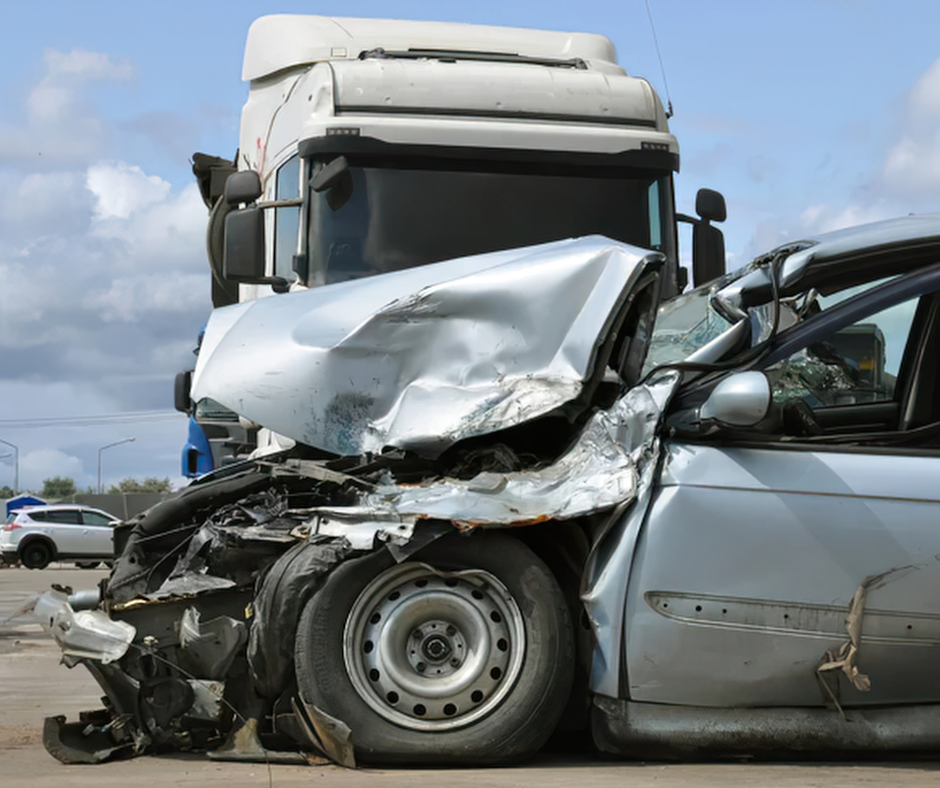
An underride crash occurs when a smaller passenger automobile collides with a semi-trailer or large commercial vehicle and slides underneath the trailer body. Because the trailer bed hangs at roughly windshield height for most cars, SUVs, and sedans, the structural impact bypasses the passenger vehicle’s primary safety features—including front bumper crumple zones and front airbag sensors.
Instead, the edge of the trailer impacts the car’s roof pillars, windshield, and passenger cabin directly, leading to catastrophic cabin intrusion or total roof shear.
Types of Underride Collisions
- Rear Underride Crashes: Occur when a vehicle impacts the back of a truck or trailer. Common scenarios include sudden braking on high-speed freeways, trucks merging at dangerously low speeds, or illegitimately parked tractor-trailers along highway shoulders.
- Side Underride Crashes: Occur when a car impacts the side of a trailer. These typically happen when a truck driver attempts a U-turn across multi-lane highways, turns left across traffic, or executes an unsafe lane change into a vehicle’s blind spot.
Why Do Underride Guards Fail in Arizona Trucking Crashes?
Federal regulations (49 CFR § 393.86) set the minimum requirements for rear impact guards on commercial motor vehicles weighing over 10,000 pounds. Despite these standards, thousands of underride guard failures are documented across the United States every year.
Primary Causes of Guard Failure
- Weak Federal Guard Standards: Safety advocacy groups and the National Transportation Safety Board (NTSB) have long cautioned that baseline FMCSA rear guard standards fail to prevent underride when impacts occur at speeds above 35–40 mph or when offset impacts occur (hitting the outer edge of the guard).
- Absence of Side Underride Guard Mandates: Federal law currently does not require side underride guards on trailers. This leaves the entire midsection between the truck’s front and rear axles unprotected during side-impact collisions.
- Corrosion and Poor Structural Maintenance: Arizona’s heat, salt exposure from cross-country transport, and general wear-and-tear cause rust, stress fractures, and joint degradation. When motor carriers neglect routine inspections, compromised welds and rusted support struts collapse instantly upon impact.
- Manufacturing and Design Defects: Inadequate attachment hardware, low-tensile steel choices, or defective engineering can cause a guard to detach or shear away completely, failing to perform its energy-absorbing function.
High-Risk Trucking Corridors in Arizona
Arizona is a major Southwestern logistics hub. Tens of thousands of long-haul freight trucks navigate Arizona roadways daily, increasing the likelihood of catastrophic crashes on major routes:
- Interstate 10 (I-10): A primary transcontinental freight corridor connecting Phoenix, Tucson, and California ports, heavily prone to high-speed rear-end underride collisions.
- Interstate 17 (I-17): Heavy commercial truck traffic combined with dramatic elevation changes and sudden traffic slowdowns through Black Canyon City and Flagstaff routes.
- Interstate 40 (I-40): A vital northern cross-country artery seeing dense long-haul commercial traffic day and night.
- Loop 101, Loop 202, & Loop 303: High-density Phoenix metro bypass highways where frequent lane changes elevate side underride collision hazards.
Establishing Liability in Arizona Underride Accidents
Determining fault in a commercial vehicle collision requires technical analysis and legal speed. Depending on the evidence gathered, multiple corporate entities and individuals may share financial liability:
| Potentially Liable Party | Basis for Legal Liability |
| Truck Driver | Speeding, distracted driving, fatigue/HOS violations, making illegal U-turns, or failing to activate hazard lights. |
| Motor Carrier / Trucking Company | Failure to inspect and maintain rear impact guards, forcing illegal driving schedules, or improper fleet maintenance. |
| Trailer & Guard Manufacturers | Defective design or manufacturing flaws that prevent guards from withstanding reasonable crash forces. |
| Maintenance & Repair Vendors | Negligent welding, improper structural repairs, or missed inspection defects prior to the crash. |
| Cargo Loading Contractors | Overloading or improperly distributing weight inside the trailer, causing guard height misalignments. |
Frequently Asked Questions (FAQs)
Are side underride guards required by law on trucks in Arizona?
No. Federal safety standards under 49 CFR § 393.86 mandate rear impact guards, but side underride guards are not mandated under federal or Arizona state law. However, if a trucking firm or trailer manufacturer fails to implement reasonable, existing safety technologies to mitigate foreseeable risks, they can still face product liability or negligence claims in court.
Can I still recover damages if my car rear-ended a semi-truck?
Yes. Under Arizona’s pure comparative fault law (A.R.S. § 12-2505), an injured party can recover compensation even if they were partially at fault for the crash. Furthermore, you are not automatically responsible for the crash simply because you hit the rear of a trailer. If the truck driver failed to use proper rear reflectors, stopped illegally in a travel lane, merged at low speeds without hazard lights, or if an improperly maintained underride guard failed during a survivable impact, significant liability falls on the commercial carrier.
What is the statute of limitations for an underride crash claim in Arizona?
Under Arizona Revised Statutes § 12-542, you generally have two (2) years from the exact date of the accident (or date of passing in a wrongful death claim) to file a formal lawsuit. Failing to take action within this two-year window will permanently bar your right to seek financial recovery.
What evidence must be secured immediately after an underride collision?
Trucking companies and their insurers begin building a defense immediately following a crash. To protect your claim, our legal team issues formal Spoliation Letters to lock down vital digital and physical evidence:
- Electronic Control Module (ECM) and “Black Box” engine data
- Electronic Logging Device (ELD) hours-of-service records
- Driver dashcam footage and mobile phone records
- Physical inspection of trailer structural welds, guard brackets, and rust levels
- Post-crash inspection reports by the Arizona Department of Public Safety (DPS)
What compensation is recoverable in a fatal underride accident claim?
If you have lost a parent, spouse, or child in an underride crash, Arizona law allows surviving family members to pursue a Wrongful Death Action for:
- Loss of financial support, future wages, and lost household benefits
- Medical costs incurred prior to the victim’s passing
- Funeral, burial, and cremation costs
- Emotional suffering, loss of companionship, care, and mental anguish
- Punitive damages (in cases of extreme recklessness or willful corporate cover-ups)
Why Choose Kash Legal for Your Arizona Truck Accident Claim?
When challenging multi-billion-dollar freight corporations and commercial insurance providers, you need a law firm equipped with technical knowledge and trial experience.
At Kash Legal:
- We Act Swiftly: We deploy accident reconstruction engineers and commercial vehicle experts directly to the scene to preserve physical evidence before the trailer is moved or repaired.
- We Understand Complex Trucking Regulations: We analyze complex FMCSA rules, maintenance logs, and guard manufacturing specifications to establish clear liability.
- No Fee Unless We Win: We handle commercial truck accident cases on a contingency fee basis. You pay zero upfront costs and zero legal fees unless we successfully recover compensation for you.
Contact Kash Legal Today for a Free Case Evaluation
If you or a loved one suffered catastrophic injuries or lost a family member in an underride crash anywhere in Arizona, do not wait to seek legal help.
- Call Kash Legal: Speak with our legal team 24/7.
- Schedule Online: Request your Free, Confidential Consultation at KashLegal.com.
Protect your legal rights. Get Kash Legal on your side today.
Our offices in Arizona:
Scottdale – 6424 E Greenway Pkwy #121, Scottsdale, AZ 85254, United States
Phone number: +1 (480) 526-4966
Mesa – 114 W Main St Unit 48, Mesa, AZ 85201, United States
Phone umber: +1 (480) 660-3873